During my first semester in college, Jonathan Katz, one of the poets on the faculty at Wichita State, made the two and a half-hour trip north to Cloud County Community College to read his poems, some of which included one-word poems. I have come up with some of my own one-word poems over the years, and I have included them below. A word qualifies as a one-word poem if it resonates with meaning--literal and, occasionally, figurative. It is the reader’s responsibility to ascertain the denotation for each word if it isn’t already known. Each poem acquires even greater significance if you can add where you first encountered the word. I encountered the word callipygian in Catch 22; rime comes from Dr. Zhivago, and mizzle comes from a Thomas Hardy novel.
One to Two Syllable One-Word Poems
Brume
Mizzle
Sough
Rime
Multi-Syllabic One-Word Poems
Ensorcel
Troglodyte
Bafflegab
Callipygian
Ultimately, these kinds of poems cause the reader to return to the dictionary with renewed interest. As an onground instructor, I encouraged my students to make a close friend of their dictionary. I even set aside a few minutes in my first-semester composition classes to have the class learn more about dictionaries and to evaluate the ones that they brought to class. Students usually left class that day resolved to buy a larger dictionary.
When I was taking a linguistics class at Wichita State as an undergraduate, I became aware of how deficient my own dictionary was. I was using a college edition of the Webster’s New World, one that was copyrighted in 1964. When my dad gave it to me in 1965, he inscribed it with the following comment, “May you one day have knowledge of most of the contents of this book.” By 1979, I recognized the necessity of acquiring a dictionary with a more detailed pronunciation key and with more words than the 142,000 in the older Webster’s New World.
After my summer class in linguistics had ended, I was browsing through a secondhand bookstore on West Douglas when I discovered a first edition of the unabridged Random House, priced for $15.00, and copyrighted 1969. I lugged that ten-pound dictionary home on the bus and kept it near me when I was studying or even just watching television, occasionally looking up a word that I heard but didn’t know. Sometimes I found enough entertainment opening up the dictionary on a table in front of me and randomly flipping from one page to another, making a new discovery on each page.
Although I later acquired the second edition of the unabridged Random House, it has never carried the same emotional attachment as the first edition. Its cloth cover now contains several rips along the length of its spine and is about ready to fall off; even so, that first edition remains a treasured book in my library. It helped me get through college at a time when I had doubts that I would ever finish my undergraduate degree.
Instead of using an abridged dictionary now, I have my needs met by a recent edition of the Random House Webster’s, College Dictionary. It’s only those more obscure words, like omphaloskepsis, that cause me to open one of the unabridged dictionaries.
My kid will eventually inherit these dictionaries of mine. He currently much prefers to use the Internet when asked to look up words in Language Arts. He hasn’t yet learned the tactile pleasure of rubbing his hands over the open pages of an unabridged dictionary.
Thursday, August 31, 2006
Wednesday, August 30, 2006
Militarism and Video Games
The other night I attended a lecture and demonstration in which one of the software engineers for the US Army outlined how video game technology is being put to use. The lecturer mentioned, for example, that the update for "America’s Army," a full fledged video game, will be available soon and serves as a recruitment tool. Video game technology is used in other instances as a means of thinking through various scenarios so that the troops will be prepared when confronting a similar situation overseas. The Army, he says, doesn’t want the soldier to discern a difference between the video game scenario and the actual event itself. Once one has become suitably brainwashed, he/she reacts in ways that have been predetermined, in other words.
One scenario duplicated what was meant to happen in Mogadishu, that is, a number of soldiers entering a structure and kidnapping a terrorist leader. The scenario goes much smoother than what occurred in Black Hawk Down; in fact, once the troops get pinned down by a sniper in a building, they call in an airstrike from an A10 Warthog circling overhead, allowing the equivalent of a Bunker Buster to destroy the entire ten-story building and everyone else inside.
Most depressing of all is that the lecturer disclosed that he is currently working on video game scenarios that won’t be released for another four years. One clip revealed that the US Army expects to remain in the Middle East for much longer than has been disclosed in the corporate media at least. This revelation duplicates the ideas expressed today at the Information Clearing House where the article Corporate Globalization and Middle East Terrorism argues that Cheney and Rumsfeld articulated their intentions six years ago in a white paper “call[ing] for permanent military bases throughout the [Middle East]…[because] America has no intentions of leaving until the last drop of oil runs dry, and Iraq’s [and Iran’s] natural wealth has been privatized.”
Don’t let your children download and play “America’s Army.” Don’t be tempted to purchase a copy when the updated version is released for the Xbox 360 and the Playstation 3 in a few more months. Boycott militarism and vote to make a difference in November (assuming, of course, that our votes count and that the election hasn't been decided by the voting machines already in place).
One scenario duplicated what was meant to happen in Mogadishu, that is, a number of soldiers entering a structure and kidnapping a terrorist leader. The scenario goes much smoother than what occurred in Black Hawk Down; in fact, once the troops get pinned down by a sniper in a building, they call in an airstrike from an A10 Warthog circling overhead, allowing the equivalent of a Bunker Buster to destroy the entire ten-story building and everyone else inside.
Most depressing of all is that the lecturer disclosed that he is currently working on video game scenarios that won’t be released for another four years. One clip revealed that the US Army expects to remain in the Middle East for much longer than has been disclosed in the corporate media at least. This revelation duplicates the ideas expressed today at the Information Clearing House where the article Corporate Globalization and Middle East Terrorism argues that Cheney and Rumsfeld articulated their intentions six years ago in a white paper “call[ing] for permanent military bases throughout the [Middle East]…[because] America has no intentions of leaving until the last drop of oil runs dry, and Iraq’s [and Iran’s] natural wealth has been privatized.”
Don’t let your children download and play “America’s Army.” Don’t be tempted to purchase a copy when the updated version is released for the Xbox 360 and the Playstation 3 in a few more months. Boycott militarism and vote to make a difference in November (assuming, of course, that our votes count and that the election hasn't been decided by the voting machines already in place).


Thursday, August 24, 2006
Starting Another Semester
Ninety-two students are enrolled in my classes for the fall semester. Just thinking of that number makes me incredibly tired because of the amount of essays that I’ll be grading. Probably the best thing about this time of the semester when my classes are just now underway, having been open and available since Sunday at midnight, is the relative peace before the influx of student essays. It’s possible to have a real life, that is, regular hours and sufficient amounts of sleep for these first few weeks.
I’m hoping to get most of my grading done during the day this semester. I’m also hoping to start the grading earlier because it has usually taken me a week before I can even begin to face the essays that I have to grade. Feelings of disappointment at the quality of the writing keep me from reading them with alacrity. It takes time to approach student essays with the ability to lend praise occasionally; the temptation when approaching them too soon is to identify the faulty mechanics and to find reasons for not giving them much attention, such as brevity, not fulfilling the assignment, plagiarism, and errors in documentation. Simply telling the student how awful his/her essay is is not teaching.
I’m hoping to get most of my grading done during the day this semester. I’m also hoping to start the grading earlier because it has usually taken me a week before I can even begin to face the essays that I have to grade. Feelings of disappointment at the quality of the writing keep me from reading them with alacrity. It takes time to approach student essays with the ability to lend praise occasionally; the temptation when approaching them too soon is to identify the faulty mechanics and to find reasons for not giving them much attention, such as brevity, not fulfilling the assignment, plagiarism, and errors in documentation. Simply telling the student how awful his/her essay is is not teaching.
Friday, August 11, 2006
Memoirs and Kathleen Norris: An Appreciation
Memoirs can often be disturbing. As a writing teacher, I have encountered students who make revealing personal disclosures in their essays. One of my supervisors when I first started teaching encouraged students to write about their personal pain; probably encountering those kinds of essays assisted her in mothering her students as they made the transition from expressive to referential writing. I now caution my students against writing about incest and rape; otherwise, I am open in terms of topics, even when the students describe abortions or drug use, for example. The students, of course, are not writing for me as their audience, but I still dislike having to encounter incest and rape in their essays. All I can do is encourage the student to seek professional help while grading the essay in terms of how well the student has fulfilled the assignment. When I taught prisoners at the United States Disciplinary Barracks, the maximum security prison on Fort Leavenworth, I got one or two essays containing intimate descriptions of rough sex. That topic probably proved cathartic for the writer.
Published memoirs can be disturbing as well. William Kittredge goes into obsessive detail regarding his drinking in Hole in the Sky. David Ray gives a lot of attention to the sexual abuse he encountered as a young person in The Endless Search. A full understanding of the person requires this disclosure. As readers, we wouldn’t want these details to be kept out of the narrative. The redundant detail can prove either overwhelming or embarrassing at times, however.
Kathleen Norris shocked her audience in The Virgin of Bennington (2001). Having grown familiar with her work from reading The Cloister Walk (1996) and Amazing Grace: A Vocabulary of Faith (1998), her audience expected the same religious themes in subsequent books. The Virgin of Bennington, on the other hand, traces Kathleen Norris’ life from her undergraduate years to her apprenticeship with the Academy of American Poets, particularly her relationship with Betty Kray, and her decision to leave New York for South Dakota. Reviewers of The Virgin of Bennington tended to caution readers because of the frankness in which Norris describes her adulterous liaisons with a professor and her abundant drug use. The narrative places an equal amount of attention on Norris’ encounters with various poets, such as James Wright and Galway Kinnell, and on her own literary success. Most of all, the memoir describes the assistance that Norris received from Betty Kray; it’s this relationship with Betty Kray, combined with Norris’ fascination with poetry, that kept the narrative from becoming a strict confessional mixed with tears and recriminations.
Used copies of The Virgin of Bennington are listed at Amazon, starting at the price of one cent. Apparently, some of her readers couldn’t accept that change occurs in the course of one’s life. Those of us familiar with Norris’ poetry recognized that she has always embraced the full range of human experience. Long before Norris attracted an audience of those exploring their religious faith, she embraced physical passion in The Middle of the World, a collection of poems that U of Pittsburgh P released in 1981.
Notice the following poem taken from The Middle of the World. This poem also appears in Journey (2001), her collection of new and selected poems.
The Dancers
We are curious about one another’s bodies
But courtly now,
Assume the prescribed position:
Your hand on my back,
Our fingers meeting, holding in air.
We move where instinct moves us
On the stage-lit dance floor,
The strong farmer’s son
And preacher’s daughter
Holding each other gingerly,
Keeping distance, like possibility,
Between us. I would like to feel your blond head
Between my legs, hear animals breathe
In the fields around us
As we get up shivering
And the moon steps down, still hungry,
In the pale grass.
Kathleen Norris.
The Middle of the World. Pittsburgh: U of Pittsburgh P, 1981. 47.
Not a religious person, only having entered a church for weddings and funerals since 1969, I still followed Norris’s career as she explored her spiritual interests. An appreciation of Donne doesn’t end with his poems of married love, e.g., “A Valediction: Forbidding Mourning” and “The Relic”; a full appreciation of his work includes “Good Friday, 1613. Riding Westward” and the “Holy Sonnets” as well as “The Flea” and “The Good-Morrow.” Similarly, one cannot turn away from Norris’ explorations in her poetry and prose. I suspect that she will continue to reveal the truth of her experience and will find those allusions that allow her to articulate those truths.
Even if Norris were to lose all of those readers who have taken an interest in her work since The Cloister Walk, she will remain as a writer of the Great Plains. She proves an inspiration for students who think that this region has nothing of value because it lacks a beach or mountains. Occasionally, the relative absence of people and the extreme fluctuations in weather cause us to explore an interior world. Norris has dealt with the Great Plains in her own unique way.
Published memoirs can be disturbing as well. William Kittredge goes into obsessive detail regarding his drinking in Hole in the Sky. David Ray gives a lot of attention to the sexual abuse he encountered as a young person in The Endless Search. A full understanding of the person requires this disclosure. As readers, we wouldn’t want these details to be kept out of the narrative. The redundant detail can prove either overwhelming or embarrassing at times, however.
Kathleen Norris shocked her audience in The Virgin of Bennington (2001). Having grown familiar with her work from reading The Cloister Walk (1996) and Amazing Grace: A Vocabulary of Faith (1998), her audience expected the same religious themes in subsequent books. The Virgin of Bennington, on the other hand, traces Kathleen Norris’ life from her undergraduate years to her apprenticeship with the Academy of American Poets, particularly her relationship with Betty Kray, and her decision to leave New York for South Dakota. Reviewers of The Virgin of Bennington tended to caution readers because of the frankness in which Norris describes her adulterous liaisons with a professor and her abundant drug use. The narrative places an equal amount of attention on Norris’ encounters with various poets, such as James Wright and Galway Kinnell, and on her own literary success. Most of all, the memoir describes the assistance that Norris received from Betty Kray; it’s this relationship with Betty Kray, combined with Norris’ fascination with poetry, that kept the narrative from becoming a strict confessional mixed with tears and recriminations.
Used copies of The Virgin of Bennington are listed at Amazon, starting at the price of one cent. Apparently, some of her readers couldn’t accept that change occurs in the course of one’s life. Those of us familiar with Norris’ poetry recognized that she has always embraced the full range of human experience. Long before Norris attracted an audience of those exploring their religious faith, she embraced physical passion in The Middle of the World, a collection of poems that U of Pittsburgh P released in 1981.
Notice the following poem taken from The Middle of the World. This poem also appears in Journey (2001), her collection of new and selected poems.
The Dancers
We are curious about one another’s bodies
But courtly now,
Assume the prescribed position:
Your hand on my back,
Our fingers meeting, holding in air.
We move where instinct moves us
On the stage-lit dance floor,
The strong farmer’s son
And preacher’s daughter
Holding each other gingerly,
Keeping distance, like possibility,
Between us. I would like to feel your blond head
Between my legs, hear animals breathe
In the fields around us
As we get up shivering
And the moon steps down, still hungry,
In the pale grass.
Kathleen Norris.
The Middle of the World. Pittsburgh: U of Pittsburgh P, 1981. 47.
Not a religious person, only having entered a church for weddings and funerals since 1969, I still followed Norris’s career as she explored her spiritual interests. An appreciation of Donne doesn’t end with his poems of married love, e.g., “A Valediction: Forbidding Mourning” and “The Relic”; a full appreciation of his work includes “Good Friday, 1613. Riding Westward” and the “Holy Sonnets” as well as “The Flea” and “The Good-Morrow.” Similarly, one cannot turn away from Norris’ explorations in her poetry and prose. I suspect that she will continue to reveal the truth of her experience and will find those allusions that allow her to articulate those truths.
Even if Norris were to lose all of those readers who have taken an interest in her work since The Cloister Walk, she will remain as a writer of the Great Plains. She proves an inspiration for students who think that this region has nothing of value because it lacks a beach or mountains. Occasionally, the relative absence of people and the extreme fluctuations in weather cause us to explore an interior world. Norris has dealt with the Great Plains in her own unique way.
Wednesday, August 09, 2006
Commercial Free Zone
Whenever I watch television, I gravitate toward those channels that are commercial free. A year ago, my wife and I decided to combine our telephone service with our cable TV and Internet services. This deal allowed us to save money every month and to gain many more channels. My first impulse when turning on the TV now is to turn to the upper channels like IFC and Sundance before I work my way to Encore and eventually to TCM and PBS. If I am reduced to watching regular TV when too tired to do anything else, I turn to the Weather Channel, the History Channel, Discovery, or National Geographic while ensuring that my finger is close to the mute button during the commercials unless I should fall asleep. Before my wife and I expanded our channel lineup, I used to spend a few minutes on Tuesday nights watching one of the professors at a local community college teach my subject area; although the class had a fifteen minute intermission about midway through the three-hour class, it still remained free from spots pitching products offering to increase my libido or to make me an epicure of fast food. Even Book TV on C-Span during weekends offers a respite from commercials. When I used to commute, I tried listening to the radio until the number of commercials forced me to turn it off. It stands to reason that I won’t be adding advertisements to this blog. If I cannot stand commercials on the TV or the radio, why would I want them on the Internet? I understand how it could be possible to make money from offering advertisements. This posting is not in judgment of other bloggers. I believe that exercising my own voice does not require remuneration apart from an occasional comment or two.
Saturday, August 05, 2006
Pamela Stewart and "Not Light"
As I mentioned in an earlier post, I have added the titles of some of my personal library in LibraryThing. I still haven’t yet paid for a lifetime membership, so the number of titles entered remains at 200. In creating tags for some of these titles, I used the tag limited edition poetry for eight of these books, all of which are chapbooks, that is, collections of less than forty pages. A chapbook allows a poet to make some of his/her work available to the reading public at a reasonable price. Often, a chapbook precedes a poet’s first full-length collection; some poets, however, have been known to release chapbooks of their work before a second or third full-length collection.
Pamela Stewart, a poet who has published five full-length collections and whose work has not gotten much exposure, has also published five chapbooks of her work. Two early chapbooks were included in The St. Vlas Elegies, her first full-length collection, which was published by L’Epervier Press in 1977. That same year, Maguey Press released Half-Tones, a chapbook containing twelve poems. One poem that she kept back from Cascades, her second full-length collection, is titled "Not Light." This poem remains one of my favorite ones; my students have responded positively to it as well when I take them through it, stanza by stanza. Under Fair Use, I am including the poem in its entirety.
NOT LIGHT
Dayflowers cluster at the steps.
The hedge is spiked
With lilacs that have dried
To brown cones. Thirty years ago,
A plum tree was planted when I was born;
It’s taller than me and the roots
Must spread, now, everywhere
Under a lawn, under
The glowing flowers that lose
Their color at this hour. I want
To wake you up from afternoon sleep
But my dress has faded
In the fading light. This garden,
Once deliberately made, is wildly
Uncared for and I think
All the flowers eat light
At dusk so their colors
Can startle us tomorrow.
Tonight, there are no
Distances, just the large
Darkness through which I make
My way. I reach
To touch where I can’t see,
And feel a pulse—
A sound the tree-frogs make
To sever fields. I could sing
Like a rude bird to wake you,
Remain here always, sleep-walking
The day, wrecking the night. Or
I could eat the flowers that ate
The light, and take the milk
From broken stems to return
Folded in a dress. And, then,
Enter the house with light inside me
Like a firefly caught
In a dark bouquet I carry into the room
Where you have moved again
Beyond the weight
Of flowers, beyond the light of stars.
Pamela Stewart
Half-Tones. Tucson: Maguey Press, 1977. 25-26.
One of my teachers once said that a woman has to use her body in her poems to get published. “Not Light” differs because the emotional situation is revealed through the images and metaphors. I could explain the poem for you, but I know that those of you who have gotten this far down the page are a bright bunch, and I need say no more.
This book remains available from Abebooks. Originally, it sold for $3.00; now it can be found for as little as $6.00 and as much as $37.00, depending on the condition.
Pamela Stewart, a poet who has published five full-length collections and whose work has not gotten much exposure, has also published five chapbooks of her work. Two early chapbooks were included in The St. Vlas Elegies, her first full-length collection, which was published by L’Epervier Press in 1977. That same year, Maguey Press released Half-Tones, a chapbook containing twelve poems. One poem that she kept back from Cascades, her second full-length collection, is titled "Not Light." This poem remains one of my favorite ones; my students have responded positively to it as well when I take them through it, stanza by stanza. Under Fair Use, I am including the poem in its entirety.
NOT LIGHT
Dayflowers cluster at the steps.
The hedge is spiked
With lilacs that have dried
To brown cones. Thirty years ago,
A plum tree was planted when I was born;
It’s taller than me and the roots
Must spread, now, everywhere
Under a lawn, under
The glowing flowers that lose
Their color at this hour. I want
To wake you up from afternoon sleep
But my dress has faded
In the fading light. This garden,
Once deliberately made, is wildly
Uncared for and I think
All the flowers eat light
At dusk so their colors
Can startle us tomorrow.
Tonight, there are no
Distances, just the large
Darkness through which I make
My way. I reach
To touch where I can’t see,
And feel a pulse—
A sound the tree-frogs make
To sever fields. I could sing
Like a rude bird to wake you,
Remain here always, sleep-walking
The day, wrecking the night. Or
I could eat the flowers that ate
The light, and take the milk
From broken stems to return
Folded in a dress. And, then,
Enter the house with light inside me
Like a firefly caught
In a dark bouquet I carry into the room
Where you have moved again
Beyond the weight
Of flowers, beyond the light of stars.
Pamela Stewart
Half-Tones. Tucson: Maguey Press, 1977. 25-26.
One of my teachers once said that a woman has to use her body in her poems to get published. “Not Light” differs because the emotional situation is revealed through the images and metaphors. I could explain the poem for you, but I know that those of you who have gotten this far down the page are a bright bunch, and I need say no more.
This book remains available from Abebooks. Originally, it sold for $3.00; now it can be found for as little as $6.00 and as much as $37.00, depending on the condition.
Reevaluating my Existence
I have thought recently of discontinuing this blog. It started as an opportunity for me to write something other than comments justifying the grades given to student essays. I have come to realize that I can squeeze in time for writing when I want to. There are limits to what one can say in a public forum like this one even though I know that this blog doesn’t generate much traffic. Even so, if I want to write personal essays, I need to keep the material offline. It’s doubtful that someone stopping by would want to read a posting that is the equivalent of three or four pages in length. When writing these postings, I am conscious of my audience and intentionally leave out material that might be too revealing or incriminating. If the material were written for a collection of essays, I would instead seek to achieve honesty and to establish my credibility through the amount of details. I recognize, too, how posting within this blog can take precedence over the writing that I need to be doing. I have decided to explore a different direction in what I post.
Wednesday, August 02, 2006
War and Personal History
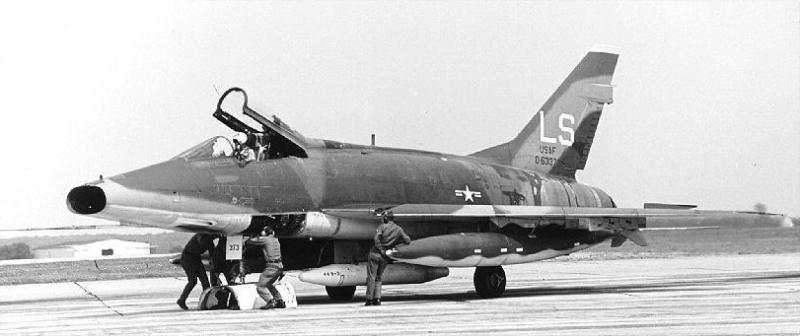
I have been following the events in Lebanon and find the events occurring there saddening and capable of drawing so many other countries into the maelstrom of war. Invading a sovereign nation and killing innocent civilians is not the way to solve problems. If Israel had indeed planned this conflict a year in advance, then they probably should have given more attention to the ramifications of what they had decided to do. It’s unfortunate that our own president has given Israel the freedom to continue their campaign against innocent civilians. Oil prices will definitely shoot to five or seven dollars a gallon or higher if either Israel or this country decides to widen the war and bomb Syria and/or Iran. Bush will extend the available resources of this country if he’s the one who chooses to wage war against yet another country. I feel sorry for those young men who will be called up once the draft is reinstated, which is sure to happen because the number of troops currently available is not enough for another ground campaign.
If every generation has its own war, my war was the one in Vietnam. I knew I had little chance of avoiding the draft when I finished high school. Ranked third from the bottom out of 124, I knew that I wouldn’t be attending college. Six months after graduation from high school, I enlisted in the Air Force, having been assured by the recruiter that I would be able to use the skills that I had acquired in developing and printing my own photographs. During the medical exam, I discovered that I was colorblind. That deficiency, combined with my low test scores, limited my career options to clerk, cook, firefighter, or security police. During the fourth or fifth week of basic training, I learned that I would be remaining at Lackland AFB and would be undergoing training as a security policeman.
Once when going through the chow line during the early stages of my SPS training, I saw a classmate from my high school. He had graduated a year before me and was now going through AZR training before his assignment as a K-9 handler at Cam Ranh Bay. He mentioned his learning to fire a mortar and a 30 caliber machine gun and didn’t seem at all worried about using his training against the sappers trying to penetrate the perimeter.
Later, after the six weeks of SPS school and earning my 81130 certification, I was assigned to Malmstrom AFB in Montana, where I eventually guarded KC 135’s, which at the time were flying gas stations used for midair refueling of B 52’s in their route over the pole. If the Air Force hadn’t lost my security clearance, I might have been guarding missile silos a hundred miles or more from the air base in all kinds of weather. Whenever the security systems failed at any one silo, the security police were called to maintain onsite protection, usually requiring that this two-man crew live in a camper until the security systems were back in place. Instead, I had to wait two months for my security clearance and worked as a clerk in the scheduling office. That summer, after I received orders for a three-year tour in England, I lived across the hall from two Vietnam veterans. They had just recently returned to what they called the world and were finishing out their tours in SAC, the Strategic Air Command. Each night they used to regale me with their stories about how much fun they had in Vietnam. Both sex and marijuana were readily available, and firing their 30 caliber machine guns from an observation tower just added to the fun. Some of the cops in our flight or unit eventually volunteered for an assignment in Southeast Asia, hoping to partake in those same pleasures. I thought I had what I wanted by shipping out to the same air base where I had attended high school as a Navy brat.
That October, I arrived in England and often patrolled the perimeter of the flight line until I earned my 81150, which qualified me for more responsibility. Afterwards, I usually either guarded weapons or aircraft on alert in the event that western Europe was attacked. Most of my time on duty occurred at night. Sunset in England during the winter occurred at 3:30 p.m., making the nights especially long. As I stood outside in four layers of clothing or sat within an unheated wooden building big enough for one person, I usually listened to Radio Luxembourg on the transistor radio I had hidden in one of my pockets.
Despite my professional duties, I still opposed using the nuclear bomb. I had grown up during the 1950’s when nuclear war remained a possibility. I also lived in Istanbul during the Cuban missile crisis and remember the night when my father came home from work and told us that we could be at war in the near future. The naval station where he worked along the Bosporus monitored the Russian ships that passed in and out of the Black Sea. Sometime later that fall, he told us that the ships carrying the missiles that had been in Cuba were seen moving through the Bosporus back to Russia. One weekend when I was in high school, we had been warned that a group representing CND, the Committee for Nuclear Disarmament, the group that created the symbol for Ban the Bomb, which later came to be known as the Peace sign, was coming on the airbase to distribute literature. Prohibited from being outside during that time, we had to decide whether to remain in the dorms or to spend the day in a building called the dayroom, which contained the cafeteria and pool tables. We later came to find out that the protestors were a friendly group and only wanted to distribute leaflets. That airbase continues to contain the most number of nuclear bombs in Europe.
Through my associations with the other airmen, I came to learn of an antiwar group in Cambridge. Composed of Americans who had avoided the draft and left the country to study at Cambridge University. This group organized a few GI’s who were opposed to the war in Vietnam. Most of the GI’s attending their meetings were actually informants for the Office of Special Investigation, who wanted to know which GI’s might compromise the mission of the Air Force. Impulsively, I volunteered to distribute antiwar literature on the base near the snack bar and earned a letter of reprimand from my commanding officer as a result. I also marched in London against the war during one of the major demonstrations. The small group to which I was associated marched in the rear. I carried a sign calling for the end to US involvement in Vietnam, Laos, and Cambodia. After this line of demonstrators snaked its way to the American embassy, the communists in the front burned the American flag and chanted slogans against the war and American involvement. I remember watching them but not participating. Afterwards, the protesters drifted away. It seemed rather anticlimactic, I thought. My most memorable moment came when I flashed my sign at a couple sitting in a Bentley as they waited for the demonstrators to pass through the intersection. This couple reminded me of my own parents; in fact, my father had a Bentley shipped back to Maryland after he finished his assignment in Scotland. It was so embarrassing riding down the highway on a Sunday afternoon in my dad’s Bentley. I just wanted to be a normal American.
After I had been in England for a year, I was relieved of duty when my squadron commander found a cache of antiwar literature in one of my dresser drawers. I was supposed to have distributed it within the barracks and didn’t have the sense to throw it away instead of leaving it in my room. Out of bravado and youthful impulsiveness, I wrote a letter for an antiwar newsletter in which I pledged more support for their antiwar activities now that I no longer had to work at my job in the military. I actually missed working and didn’t have the sense to keep my mouth shut. I probably never would have been able to rejoin my squadron, however. The Air Force would have decided that I couldn’t be trusted and would have retrained me to fight fires or to cook.
Within a couple of months, after I refused to fight the charges against me and after I refused to undergo attitude readjustment at a base in Colorado, which would have kept me in the military, I was honorably discharged and sent home to Maryland. Inarticulate and impulsive, I don’t know what a trial would have done for me. I certainly couldn’t have defended myself and couldn’t have expressed why the literature had remained in my barracks room. If I had been a reflective and intelligent person, I would have realized—when first arriving in England—that completing my tour of duty would have been the best thing for me because it would have offered the opportunity to mature and to gain more experience in the world and with women.
No one except my parents and sister welcomed me home. I didn’t have the experiences that would have let me join any of the antiwar groups if that were an ambition of mine. I also didn’t have the grades that could have gotten me into a four-year college. After nine months, I found a community college in Kansas with an open admissions policy. The starlit autumn nights fascinated me, and I delighted in the freight trains hauling carloads of wheat through northcentral Kansas. I was living among the images in an Allen Ginsberg poem.
As I grew older, I recognized that I missed a unique opportunity by not serving in Vietnam. It seemed as though all of my experiences up to that point had been in preparation for serving in Vietnam. I also thought that if I had completed my four years in the Air Force, I would have emerged a changed person, one ready for the responsibilities of adulthood. I didn’t realize that I still might have drifted through a slew of jobs and still might have spent ten years earning my undergraduate degree. Around 1984 or so, I discovered that even Vietnam-era veterans suffered problems in dealing with others, in abusing drugs, and in readjusting. Apparently, the attitudes we acquired regarding the military and figures of authority were universal among those of us who served in the late 1960’s and early 1970’s when public opinion had turned against the war.
The ambivalence I have regarding Vietnam occurs infrequently now. I don’t feel as though I missed out. More often, I recognize that I did the right thing by not going to Vietnam. I recognize now the accuracy in Wildred Owen’s poem “Dulce et Decorum Est” in which so many young people grow enamored with what Owen calls "the old lie,” that is, “Dulce et decorum est/pro pratria mori.” My transformation, I believe, occurred at a veteran’s day pow-wow where I was a visitor. All of the veterans were called out to the dance floor for a welcoming home ceremony. As I bowed my head, one of the older Indians said a prayer in which he asked the people attending and the nation as a whole to welcome back home those of us who had served in the military. I’m not an Indian or a believer in traditional religion, but I still felt cleansed and no longer felt as much at odds with myself for what I hadn’t done.
Subscribe to:
Posts (Atom)